前言
在 Go runtime 调度器精讲(七):案例分析 一文我们介绍了一个抢占的案例。从案例分析抢占的实现,并未涉及到源码层面。本文将继续从源码入手,看 Go runtime 调度器是如何实现抢占逻辑的。
sysmon 线程
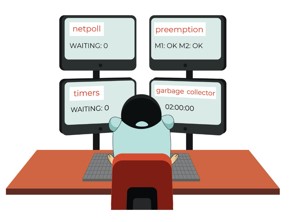
还记得 Go runtime 调度器精讲(四):运行 main goroutine 一文我们蜻蜓点水的提了一嘴 sysmon 线程,它是运行在系统栈上的监控线程,负责监控 goroutine 的状态,并且做相应处理。当然,也负责做抢占的处理,它是本讲的重点。
sysmon 的创建在 src/runtime/proc.go:sysmon:
 1// The main goroutine.
 2func main() {
 3	...
 4	if GOARCH != "wasm" { // no threads on wasm yet, so no sysmon
 5		systemstack(func() {
 6			newm(sysmon, nil, -1)
 7		})
 8	}
 9    ...
10}
sysmon 不需要和 P 绑定,作为监控线程运行在系统栈。进入 sysmon:
 1func sysmon() {
 2	...
 3    idle := 0 // how many cycles in succession we had not wokeup somebody
 4	delay := uint32(0)
 5
 6	for {
 7		if idle == 0 { // start with 20us sleep...
 8			delay = 20  //
 9		} else if idle > 50 { // start doubling the sleep after 1ms...
10			delay *= 2
11		}
12		if delay > 10*1000 { // up to 10ms
13			delay = 10 * 1000
14		}
15		usleep(delay)           // 休眠 delay us
16
17        // retake P's blocked in syscalls
18		// and preempt long running G's
19		if retake(now) != 0 {
20			idle = 0
21		} else {
22			idle++
23		}
24        ...
25    }
26}
省略了很多和抢占无关的内容,和抢占相关的是 retake 函数,进入 retake:
 1func retake(now int64) uint32 {
 2	n := 0
 3	lock(&allpLock)
 4
 5    // 。。。
 6	for i := 0; i < len(allp); i++ {
 7        if pp == nil {
 8			// This can happen if procresize has grown
 9			// allp but not yet created new Ps.
10			continue
11		}
12
13        pd := &pp.sysmontick                                        // 用于 sysmon 线程记录被监控 p 的系统调用次数和调用时间
14		s := pp.status
15		sysretake := false
16		if s == _Prunning || s == _Psyscall {                       // 如果 P 是 _Prunning 或者 _Psyscall,则对 P 进行处理
17			// Preempt G if it's running for too long.
18			t := int64(pp.schedtick)                                // P 的 schedtick 用于记录 P 被调度的次数
19			if int64(pd.schedtick) != t {
20				pd.schedtick = uint32(t)                            // 如果系统监控和调度次数不一致,则更新系统监控的调度次数和调度时间点
21				pd.schedwhen = now
22			} else if pd.schedwhen+forcePreemptNS <= now {          // forcePreemptNS 为 10ms,如果 P 的 goroutine 运行时间超过 10ms 则对 P 发起抢占
23				preemptone(pp)                                      // 抢占 P
24				// In case of syscall, preemptone() doesn't
25				// work, because there is no M wired to P.
26				sysretake = true                                    // 设置 retake 标志为 true
27			}
28		}
29        ...
30    }
31    unlock(&allpLock)
32	return uint32(n)
33}
这里重点在如果 P 的 goroutine 运行时间过长,则进入 preemptone(pp) 抢占 P,也就是抢占运行时间过长的 goroutine。
抢占运行时间过长的 goroutine
进入 preemptone:
 1func preemptone(pp *p) bool {
 2	mp := pp.m.ptr()                                                // P 绑定的线程
 3	if mp == nil || mp == getg().m {
 4		return false
 5	}
 6	gp := mp.curg                                                   // 线程运行的 goroutine,就是该 goroutine 运行过长的
 7	if gp == nil || gp == mp.g0 {
 8		return false
 9	}
10
11    gp.preempt = true                                               // 设置抢占标志位为 true
12
13    // Every call in a goroutine checks for stack overflow by
14	// comparing the current stack pointer to gp->stackguard0.
15	// Setting gp->stackguard0 to StackPreempt folds
16	// preemption into the normal stack overflow check.
17	gp.stackguard0 = stackPreempt                                   // 官方的注释已经很清晰了,设置 goroutine 的 stackguard0 为 stackPreempt,stackPreempt 是一个比任何栈都大的数
18
19    // Request an async preemption of this P.
20	if preemptMSupported && debug.asyncpreemptoff == 0 {            // 是否开启异步抢占,这里我们先忽略
21		pp.preempt = true
22		preemptM(mp)
23	}
24
25	return true
26}
可以看到,preemptone 主要是更新了 goroutine 的 gp.stackguard0,为什么更新这个呢?
主要是在下一次调用函数时,调度器会根据这个值判断是否应该抢占当前 goroutine。
我们看一个 goroutine 栈如下:
1func gpm() {
2	print("hello runtime")
3}
4
5func main() {
6	go gpm()
7	time.Sleep(1 * time.Minute)
8	print("hello main")
9}
给 goroutine 加断点,dlv 进入断点处:
 1(dlv) b main.gpm
 2Breakpoint 1 set at 0x46232a for main.gpm() ./main.go:5
 3(dlv) c
 4> main.gpm() ./main.go:5 (hits goroutine(5):1 total:1) (PC: 0x46232a)
 5     1: package main
 6     2:
 7     3: import "time"
 8     4:
 9=>   5: func gpm() {
10     6:         print("hello runtime")
11     7: }
12     8:
13     9: func main() {
14    10:         go gpm()
15(dlv) disass
16TEXT main.gpm(SB) /root/go/src/foundation/gpm/main.go
17        main.go:5       0x462320        493b6610        cmp rsp, qword ptr [r14+0x10]
18        main.go:5       0x462324        762a            jbe 0x462350
19        main.go:5       0x462326        55              push rbp
20        main.go:5       0x462327        4889e5          mov rbp, rsp
21=>      main.go:5       0x46232a*       4883ec10        sub rsp, 0x10
22        main.go:6       0x46232e        e82d28fdff      call $runtime.printlock
23        ...
24        main.go:5       0x462350        e8abb1ffff      call $runtime.morestack_noctxt
25        main.go:5       0x462355        ebc9            jmp $main.gpm
在 main.gpm 栈中,首先执行 cmp rsp, qword ptr [r14+0x10] 指令,这个指令的意思是将当前栈的栈顶和 [r14+0x10] 比较,[r14+0x10] 就是 goroutine 的 stackguard0 值。如果 rsp 大于 g.stackguard0 表示栈容量是足够的,如果小于 g.stackguard0 表示栈空间不足,需要执行 jbe 0x462350 跳转指令,调用 call $runtime.morestack_noctxt 扩栈。
这里如果 goroutine 是要被抢占的,那么 g.stackguard0 将被 sysmon 设置成很大的值。goroutine(中的函数) 在调用时,会执行 cmp rsp, qword ptr [r14+0x10] 指令比较栈顶指针和 g.stackguard0。因为栈顶 rsp 肯定小于 g.stackguard0,调用 call $runtime.morestack_noctxt 扩栈。
 1// morestack but not preserving ctxt.
 2TEXT runtime·morestack_noctxt(SB),NOSPLIT,$0
 3	MOVL	$0, DX
 4	JMP	runtime·morestack(SB)
 5
 6TEXT runtime·morestack(SB),NOSPLIT|NOFRAME,$0-0
 7    ...
 8    // runtime.morestack 内容很多,这里只挑重点和抢占相关的 runtime.newstack 介绍
 9    BL	runtime·newstack(SB)
10    ...
进入 runtime.newstack:
 1func newstack() {
 2    thisg := getg()
 3    ...
 4    gp := thisg.m.curg
 5    ...
 6    stackguard0 := atomic.Loaduintptr(&gp.stackguard0)
 7    preempt := stackguard0 == stackPreempt                                  // 如果 gp.stackguard0 == stackPreempt,则设置抢占标志 preempt == true
 8    if preempt {
 9		if !canPreemptM(thisg.m) {                                          // 判断是否可以抢占
10			// Let the goroutine keep running for now.
11			// gp->preempt is set, so it will be preempted next time.
12			gp.stackguard0 = gp.stack.lo + stackGuard                       // 如果不能抢占,恢复 gp.stackguard0 为正常值
13			gogo(&gp.sched) // never return                                 // gogo 执行 goroutine
14		}
15	}
16    ...
17    if preempt {                                                            // 执行到这里,说明 goroutine 是可以抢占的,再次判断抢占标志是否为 true
18		if gp == thisg.m.g0 {
19			throw("runtime: preempt g0")
20		}
21		if thisg.m.p == 0 && thisg.m.locks == 0 {
22			throw("runtime: g is running but p is not")
23		}
24
25		...
26
27		if gp.preemptStop {                                                 // 判断抢占类型是否是 preemptStop,这个类型和 GC 有关,这里我们不讨论
28			preemptPark(gp) // never returns
29		}
30
31		// Act like goroutine called runtime.Gosched.
32		gopreempt_m(gp) // never return                                     // 重点看 gopreempt_m 进行的抢占
33	}
34    ...
35}
newstack 会执行抢占逻辑,如注释所示,经过层层执行,调用 gopreempt_m 抢占运行时间过长的 goroutine:
 1func gopreempt_m(gp *g) {
 2	goschedImpl(gp)
 3}
 4
 5func goschedImpl(gp *g) {
 6	status := readgstatus(gp)                           // 获取 goroutine 的状态
 7	if status&^_Gscan != _Grunning {
 8		dumpgstatus(gp)
 9		throw("bad g status")
10	}
11	casgstatus(gp, _Grunning, _Grunnable)               // 这时候 goroutine 还是运行的,更新 goroutine 的状态为 _Grunnable
12	dropg()                                             // 调用 dropg 解除线程和 goroutine 的绑定
13	lock(&sched.lock)
14	globrunqput(gp)                                     // 将 goroutine 放到全局可运行队列中,因为 goroutine 运行时间够长了,不会放到 P 的本地队列中,这也是一种惩罚机制吧
15	unlock(&sched.lock)
16
17	schedule()                                          // 线程再次进入调度逻辑,运行下一个 _Grunnable 的 goroutine
18}
至此,我们知道对于运行时间过长的 goroutine 是怎么抢占的。
再次梳理下执行流程:
sysmon监控线程发现运行时间过长的 goroutine,将 goroutine 的 stackguard0 更新为一个比任何栈都大的 stackPreempt 值- 当线程进行函数调用时,会比较栈顶 rsp 和 g.stackguard0 检查 goroutine 栈的栈空间。
- 因为更新了 goroutine 栈的
stackguard0,线程会走到扩展逻辑,进入根据 preempt 标志位,执行对应的抢占调度。
小结
本讲介绍了 sysmon 线程,顺着 sysmon 线程介绍了抢占运行时间过长的 goroutine 的实现方式。下一讲会继续介绍 sysmon 线程和抢占系统调用时间过长的 goroutine。