前言
kube-apiserver 不仅负责 RESTful API 路由的建立,也负责请求的认证,授权和准入。如下图所示:
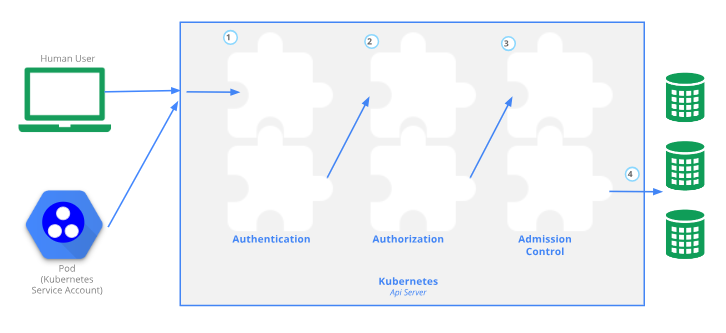
本篇文章将介绍 kube-apiserver 的认证机制。
认证 Authentication
认证是对请求的认证,确认请求是否具有访问 Kubernetes 集群的权限。在 kube-apiserver 中,通过 handler 处理请求的认证,所有请求都将通过认证 handler 进行认证。可以把它理解成 Gin 框架的中间件。
认证 handler
首先,从认证 handler 的创建过程入手。
 1# kubernetes/vendor/k8s.io/apiserver/pkg/server/config.go
 2// 进入 GenericAPIServer 的创建函数 New
 3func (c completedConfig) New(name string, delegationTarget DelegationTarget) (*GenericAPIServer, error) {
 4	handlerChainBuilder := func(handler http.Handler) http.Handler {
 5		return c.BuildHandlerChainFunc(handler, c.Config)
 6	}
 7
 8
 9	apiServerHandler := NewAPIServerHandler(name, c.Serializer, handlerChainBuilder, delegationTarget.UnprotectedHandler())
10    ...
11}
12
13# kubernetes/vendor/k8s.io/apiserver/pkg/server/config.go
14func NewAPIServerHandler(name string, s runtime.NegotiatedSerializer, handlerChainBuilder HandlerChainBuilderFn, notFoundHandler http.Handler) *APIServerHandler {
15	...
16
17	director := director{
18		name:               name,
19		goRestfulContainer: gorestfulContainer,
20		nonGoRestfulMux:    nonGoRestfulMux,
21	}
22
23	return &APIServerHandler{
24        // 创建 FullHandlerChain
25		FullHandlerChain:   handlerChainBuilder(director),
26		GoRestfulContainer: gorestfulContainer,
27		NonGoRestfulMux:    nonGoRestfulMux,
28		Director:           director,
29	}
30}
这里 FullHandlerChain 内装有认证 handler。继续看哪里定义 handlerChainBuilder 函数的。
 1# kubernetes/vendor/k8s.io/apiserver/pkg/server/config.go
 2func NewConfig(codecs serializer.CodecFactory) *Config {
 3	return &Config{
 4        ...
 5		BuildHandlerChainFunc:          DefaultBuildHandlerChain,
 6    }
 7}
 8
 9# kubernetes/vendor/k8s.io/apiserver/pkg/server/config.go
10func DefaultBuildHandlerChain(apiHandler http.Handler, c *Config) http.Handler {
11    handler = genericapifilters.WithAuthentication(handler, c.Authentication.Authenticator, failedHandler, c.Authentication.APIAudiences, c.Authentication.RequestHeaderConfig)
12    return handler
13}
14
15# kubernetes/vendor/k8s.io/apiserver/pkg/endpoints/filters/authentication.go
16func WithAuthentication(handler http.Handler, auth authenticator.Request, failed http.Handler, apiAuds authenticator.Audiences, requestHeaderConfig *authenticatorfactory.RequestHeaderConfig) http.Handler {
17	return withAuthentication(handler, auth, failed, apiAuds, requestHeaderConfig, recordAuthenticationMetrics)
18}
在创建配置 Config 时,将 DefaultBuildHandlerChain 赋值给 BuildHandlerChainFunc。DefaultBuildHandlerChain 内的 genericapifilters.WithAuthentication 创建了认证 handler。
接着往下走,进入 genericapifilters.WithAuthentication。
 1func withAuthentication(handler http.Handler, auth authenticator.Request, failed http.Handler, apiAuds authenticator.Audiences, requestHeaderConfig *authenticatorfactory.RequestHeaderConfig, metrics authenticationRecordMetricsFunc) http.Handler {
 2	return http.HandlerFunc(func(w http.ResponseWriter, req *http.Request) {
 3		resp, ok, err := auth.AuthenticateRequest(req)
 4
 5		// authorization header is not required anymore in case of a successful authentication.
 6		req.Header.Del("Authorization")
 7
 8		req = req.WithContext(genericapirequest.WithUser(req.Context(), resp.User))
 9		handler.ServeHTTP(w, req)
10	})
11}
12
13type Request interface {
14	AuthenticateRequest(req *http.Request) (*Response, bool, error)
15}
可以看到,认证 handler 中通过 auth.AuthenticateRequest(req) 对 RESTful API 请求进行认证。这里 auth 是一个实现 Request 接口的实例。
那么,auth 实例是在哪里创建的呢,调用的 AuthenticateRequest 方法具体做的是什么呢?带着这个问题我们看下一节认证实例。
认证实例
通过层层回溯找到调用点。
1handler = genericapifilters.WithAuthentication(handler, c.Authentication.Authenticator, failedHandler, c.Authentication.APIAudiences, c.Authentication.RequestHeaderConfig)
这里 c.Authentication.Authenticator 即为 auth 的实例。我们看 c.Authentication.Authenticator 是在哪里创建的。
 1# kubernetes/pkg/controlplane/apiserver/config.go
 2func BuildGenericConfig(
 3	s controlplaneapiserver.CompletedOptions,
 4	schemes []*runtime.Scheme,
 5	getOpenAPIDefinitions func(ref openapicommon.ReferenceCallback) map[string]openapicommon.OpenAPIDefinition,
 6) (
 7	genericConfig *genericapiserver.Config,
 8	versionedInformers clientgoinformers.SharedInformerFactory,
 9	storageFactory *serverstorage.DefaultStorageFactory,
10
11	lastErr error,
12) {
13    // Authentication.ApplyTo requires already applied OpenAPIConfig and EgressSelector if present
14	if lastErr = s.Authentication.ApplyTo(&genericConfig.Authentication, genericConfig.SecureServing, genericConfig.EgressSelector, genericConfig.OpenAPIConfig, genericConfig.OpenAPIV3Config, clientgoExternalClient, versionedInformers); lastErr != nil {
15		return
16	}
17}
18
19# kubernetes/pkg/kubeapiserver/options/authentication.go
20func (o *BuiltInAuthenticationOptions) ApplyTo(authInfo *genericapiserver.AuthenticationInfo, secureServing *genericapiserver.SecureServingInfo, egressSelector *egressselector.EgressSelector, openAPIConfig *openapicommon.Config, openAPIV3Config *openapicommon.Config, extclient kubernetes.Interface, versionedInformer informers.SharedInformerFactory) error {
21	authenticatorConfig, err := o.ToAuthenticationConfig()
22	if err != nil {
23		return err
24	}
25
26    ...
27
28	authInfo.Authenticator, openAPIConfig.SecurityDefinitions, err = authenticatorConfig.New()
29}
c.Authentication.Authenticator 实际是 authenticatorConfig.New() 创建的 authInfo.Authenticator 认证器。进入 authenticatorConfig.New() 看创建认证器过程。
 1# kubernetes/pkg/controlplane/apiserver/config.go
 2func (config Config) New() (authenticator.Request, *spec.SecurityDefinitions, error) {
 3	var authenticators []authenticator.Request
 4	var tokenAuthenticators []authenticator.Token
 5	securityDefinitions := spec.SecurityDefinitions{}
 6
 7	// front-proxy, BasicAuth methods, local first, then remote
 8	// Add the front proxy authenticator if requested
 9	if config.RequestHeaderConfig != nil {
10		requestHeaderAuthenticator := headerrequest.NewDynamicVerifyOptionsSecure(
11			config.RequestHeaderConfig.CAContentProvider.VerifyOptions,
12			config.RequestHeaderConfig.AllowedClientNames,
13			config.RequestHeaderConfig.UsernameHeaders,
14			config.RequestHeaderConfig.GroupHeaders,
15			config.RequestHeaderConfig.ExtraHeaderPrefixes,
16		)
17		authenticators = append(authenticators, authenticator.WrapAudienceAgnosticRequest(config.APIAudiences, requestHeaderAuthenticator))
18	}
19
20	// X509 methods
21	if config.ClientCAContentProvider != nil {
22		certAuth := x509.NewDynamic(config.ClientCAContentProvider.VerifyOptions, x509.CommonNameUserConversion)
23		authenticators = append(authenticators, certAuth)
24	}
25
26    ...
27
28    authenticator := union.New(authenticators...)
29	authenticator = group.NewAuthenticatedGroupAdder(authenticator)
30    return authenticator, &securityDefinitions, nil
31}
32
33# kubernetes/vendor/k8s.io/apiserver/pkg/authentication/request/union/union.go
34func New(authRequestHandlers ...authenticator.Request) authenticator.Request {
35	if len(authRequestHandlers) == 1 {
36		return authRequestHandlers[0]
37	}
38	return &unionAuthRequestHandler{Handlers: authRequestHandlers, FailOnError: false}
39}
40
41# kubernetes/vendor/k8s.io/apiserver/pkg/authentication/group/authenticated_group_adder.go
42func NewAuthenticatedGroupAdder(auth authenticator.Request) authenticator.Request {
43	return &AuthenticatedGroupAdder{auth}
44}
可以看到,认证器是一系列认证器的组合。每个认证器包括组合的认证器都实现了 authenticator.Request 接口的 AuthenticateRequest 方法。
回头看在 handler 中定义的 auth.AuthenticateRequest(req) 方法,实际执行的是 authenticator.AuthenticateRequest(req)。
 1# kubernetes/vendor/k8s.io/apiserver/pkg/authentication/group/authenticated_group_adder.go
 2func (g *AuthenticatedGroupAdder) AuthenticateRequest(req *http.Request) (*authenticator.Response, bool, error) {
 3	r, ok, err := g.Authenticator.AuthenticateRequest(req)
 4	if err != nil || !ok {
 5		return nil, ok, err
 6	}
 7}
 8
 9# kubernetes/vendor/k8s.io/apiserver/pkg/authentication/request/union/union.go
10func (authHandler *unionAuthRequestHandler) AuthenticateRequest(req *http.Request) (*authenticator.Response, bool, error) {
11	var errlist []error
12	for _, currAuthRequestHandler := range authHandler.Handlers {
13		resp, ok, err := currAuthRequestHandler.AuthenticateRequest(req)
14		if err != nil {
15			if authHandler.FailOnError {
16				return resp, ok, err
17			}
18			errlist = append(errlist, err)
19			continue
20		}
21
22		if ok {
23			return resp, ok, err
24		}
25	}
26
27	return nil, false, utilerrors.NewAggregate(errlist)
28}
通过层层调用,最终执行到 unionAuthRequestHandler.AuthenticateRequest。该方法中循环执行各个认证器的 AuthenticateRequest 方法,直到认证成功。
各认证器的认证方式不同,这里就不过多介绍了,具体涉及到各种认证方式的时候可详细看相应认证器的 AuthenticateRequest 方法。
总结
通过本篇文章介绍了 kube-apiserver 中的 Authentication 认证流程,下一篇将继续介绍 kube-apiserver 的 Authorization 授权流程。